
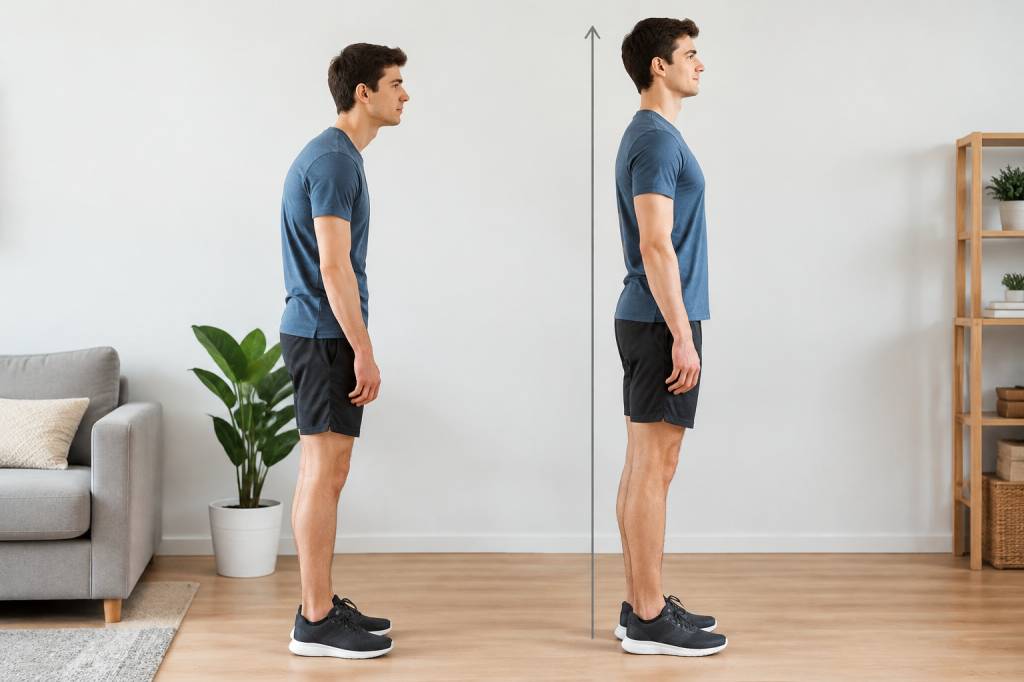
Want to look taller without surgery? The most reliable approach is not a miracle stretch or a special supplement. It is a combination of better posture, clothes and footwear that suit you, and realistic expectations about what can change. These strategies can improve your height appearance and the way you carry yourself, but they cannot lengthen adult bones.
That distinction matters. Once growth plates have closed, usually by the end of adolescence, exercise and nutrition cannot make your skeleton grow taller. Still, posture can affect how much of your natural height you show, and small styling choices can create a longer, more balanced silhouette. Here is what works, what does not, and how to get started.
First, understand what “getting taller” can mean
Your height is largely determined by genetics and childhood development. In adults, it can vary slightly during the day: spinal discs compress under normal daily loading, so many people measure a little taller in the morning than in the evening. This is a temporary fluctuation, not new growth.
There are, however, two practical goals you can work toward. The first is standing at your full natural height by improving posture and addressing stiffness or weakness that makes you slump. The second is creating the visual impression of more height through footwear and clothing. Neither changes the length of your bones, but both can make a noticeable difference to how you look and feel.
Improve your posture, not just your pose
Posture is not about holding yourself rigidly upright all day. A natural, comfortable position allows your head, rib cage and pelvis to stay reasonably aligned, with your shoulders relaxed. If you regularly round your upper back, push your head forward or let your hips tip far forward, you may appear shorter than you are.
A quick self-check can help. Stand with your back near a wall, feet comfortable and knees relaxed. Notice whether your head and upper back can come close to the wall without forcing your chin up or arching your lower back. This is not a pass-or-fail test; bodies differ. Use it as a reminder to find a comfortable, tall position rather than pushing yourself into an exaggerated military stance.
For someone who spends hours at a desk, the biggest improvement may come from changing the setup rather than trying to “remember” good posture every minute. Position your screen so you can look ahead without bending your neck, keep your feet supported, and take regular movement breaks. A short walk or a few minutes of standing can be more useful than staying frozen in a supposedly perfect position.
Build strength and mobility for a taller stance
Exercise will not lengthen adult bones, but strength and mobility can make upright posture easier to maintain. A balanced routine can include upper-back strengthening, core work, hip mobility and general physical activity. Start gently, especially if you are new to exercise or have pain.
- Rows: Use a resistance band or a cable machine to strengthen the muscles that draw your shoulder blades back. Keep your shoulders relaxed rather than shrugging.
- Wall slides: Stand with your back near a wall and move your arms upward only as far as you can without forcing your lower back to arch.
- Bird-dogs: From hands and knees, extend one arm and the opposite leg while keeping your trunk steady. Use a small range of motion if balance is difficult.
- Hip-flexor stretches: A gentle half-kneeling stretch may help if prolonged sitting leaves the front of your hips feeling tight. Avoid forcing the stretch or arching your back.
- Walking and other regular activity: These support general fitness and give you opportunities to move out of one position.
Try two or three sessions a week, adjusting the exercises to your ability. The aim is not to hold your shoulders back all day or to chase a dramatic posture transformation. It is to build a body that can move comfortably and support a relaxed, upright stance. If an exercise causes pain, stop and seek advice from a qualified health professional.
Choose shoes that add height comfortably
Footwear is one of the simplest ways to increase your visible height immediately. A shoe with a thicker sole can add a modest amount, while elevator shoes are designed with a raised heel concealed inside the shoe. The height gained varies by style, and a higher shoe is not automatically a better choice.
Prioritize fit, stability and comfort. Your heel should not slip excessively, your toes should have room, and you should be able to walk naturally. A sudden jump to a much higher heel or insert can feel awkward and may alter how you move. If you are trying height-increasing footwear for the first time, begin with a modest lift and wear it for a short period before relying on it for a full day.
Think about where you will wear the shoes, too. A formal pair might work well with trousers, while a casual design may suit jeans. The most convincing choice is one that looks like part of your outfit rather than an uncomfortable secret you are constantly adjusting.
Use clothing to create a longer line
Clothes cannot change your height, but fit and proportion influence how tall you appear. The goal is to avoid visual breaks that divide your body into short-looking sections and to choose pieces that sit comfortably on your frame.
- Choose a good fit: Very oversized clothes can overwhelm your proportions, while tight clothing may feel restrictive. Look for garments that follow your shape without pulling or bunching.
- Try a more continuous color scheme: Wearing similar shades on top and bottom can create a less interrupted visual line. It is an option, not a rule; contrast can look great when styled intentionally.
- Pay attention to trouser length: Trousers that pool heavily around the shoes can make the lower body look visually shorter. A clean hem often looks more balanced.
- Consider vertical details: A subtle stripe, an open jacket or a simple line of buttons can draw the eye up and down. Keep patterns in proportion to your frame.
- Check where waistbands sit: A rise that fits comfortably can influence how your legs and torso appear in relation to each other.
These are styling tools, not rules about what you are allowed to wear. Try one change at a time in a full-length mirror or take a photo from a normal viewing distance. That is more useful than judging an outfit from a close-up mirror angle.
Support natural growth during childhood and adolescence
If you are still growing, health habits can support normal development, but they cannot guarantee a particular adult height. Adequate food, sleep and physical activity matter for overall health. A balanced eating pattern should provide enough energy, protein, vitamins and minerals. No single food, powder or “height diet” can override genetics or make growth plates stay open.
Children and teenagers who are growing more slowly than expected, dropping across growth percentiles, or experiencing puberty much earlier or later than peers should be assessed by a healthcare professional. A clinician can review growth measurements over time and decide whether any investigation is needed. A single height measurement is less informative than the pattern of growth.
For adults, good nutrition and sleep remain valuable for health and energy, but they will not restart bone growth. Be cautious of products that promise several inches through supplements, special routines or secret techniques. Ask what evidence supports the claim, and be wary of testimonials presented as proof.
What about stretching, hanging and “height exercises”?
Stretching may ease stiffness and help you stand more comfortably, but it does not permanently lengthen your bones. Hanging from a bar can temporarily unload the spine, yet any small change in measured height is not lasting. Likewise, yoga and Pilates can improve flexibility, balance and body awareness, but they do not increase adult skeletal height.
That does not make these activities pointless. If a mobility session helps you feel less stiff after sitting, that is a worthwhile benefit. Just judge it by how you move and feel, not by promises of permanent extra inches.
When posture changes need professional advice
Posture varies naturally, and not everyone needs to look perfectly straight. But persistent back or neck pain, a sudden change in posture, numbness, weakness or difficulty walking deserves medical attention. A physiotherapist or clinician can help identify whether pain, injury or another issue is affecting the way you stand.
If you are concerned about your height or growth, a healthcare professional can put measurements into context. For children, growth charts and a medical history are more useful than comparisons with siblings or classmates. For adults, an unexpected loss of height over time should be discussed with a clinician, particularly when it comes with back pain or a history of fractures.
A practical plan for the next month
You do not need to overhaul your life to look and feel more upright. Pick a few changes you can repeat consistently:
- Adjust your desk or phone habits so you are not spending long stretches with your head bent forward.
- Take brief movement breaks during long periods of sitting.
- Do a simple strength and mobility routine two or three times a week, using comfortable movements.
- Try shoes that provide a modest lift without compromising fit or balance.
- Experiment with clothing proportions and keep the combinations that make you feel confident.
- Track comfort, energy and how naturally you stand—not just the number on a tape measure.
The most dependable way to look taller without surgery is to make the most of your natural height: stand comfortably, move regularly and choose clothes and shoes that work for you. There is no need to chase extreme fixes. Small, realistic changes can improve your posture and presentation while keeping the focus where it belongs: on feeling good in your own body.